You’ve shown traits for both the FIGHT and FLIGHT trauma responses. It’s common for the nervous system to react differently in different situations, yet we usually rely on one primary pattern under stress. After reading through the information below, notice over the coming days or weeks whether you tend to respond with freeze or flight when your nervous system feels overactivated.
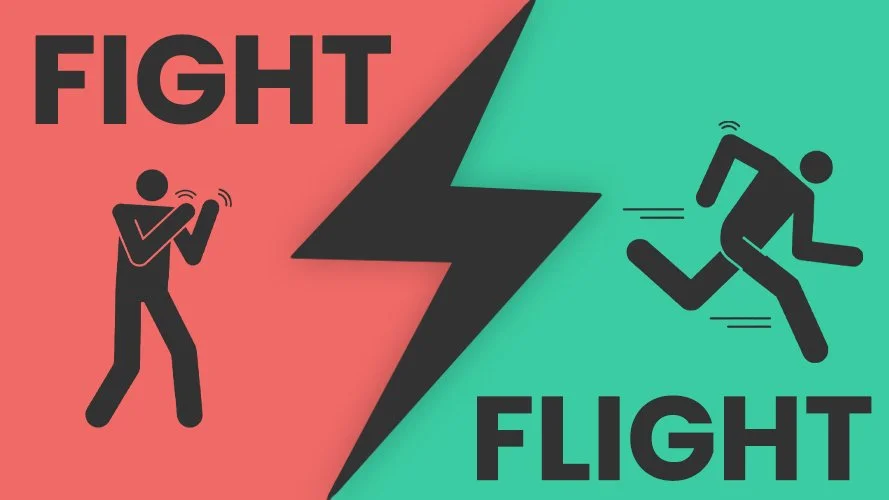
When you’re in “fight” mode, your nervous system prepares you to protect yourself by pushing back. This might show up as anger, frustration, defensiveness, or a strong urge to stand your ground. Deep down, it’s your body’s way of saying, “I won’t let anything hurt me.”
Common symptoms you may experience:
Physical:
• Tense muscles or clenched jaw
• Flushed face or racing heart
• Surges of energy or adrenaline
Mental:
• Racing thoughts or fixation on threats
• Feeling the need to control outcomes
• Quick reactions to perceived challenges
Emotional:
• Irritability or emotional intensity
• Sudden bursts of anger or frustration
Behavioral:
• Confrontational or controlling behavior
• Strong boundaries or fear of losing control
There’s nothing wrong with this response.
It’s powerful and protective.
Your body is wired to defend you.
When you understand this energy, it can help you set boundaries.
It can help you fight for your values.
It can help you stay resilient.
The key is learning to channel your strength — without letting it control you.
When you’re in “flight” mode, your nervous system urges you to escape the threat. You might feel an overwhelming need to move, run, or get away, physically or emotionally. Deep down, your body believes safety lies in motion.
Common symptoms you may experience:
Physical:
• Restlessness or jittery energy
• Rapid heartbeat or shallow breathing
• Trouble relaxing or sleeping
Mental:
• Racing thoughts or overthinking
• Difficulty focusing or staying present
Emotional:
• Anxiety or panic sensations
• Fear of being trapped or stuck
Behavioral:
• Staying constantly busy or distracted
• Avoidance of conflict or emotional intimacy
• Impulsive changes in jobs, plans, or relationships
There’s nothing wrong with this response.
It’s protective and adaptive—your body is trying to keep you safe by helping you move away from danger.
Flight energy is your system’s way of saying,
“Let’s get to safety.”
When harnessed, this same energy can transform into momentum, creativity, and motivation.
What it truly needs is your understanding.
The chance to slow down, breathe, and create safety—without always needing to run.