Based on your answers, your trauma response is fluid or inconclusive, as you scored evenly in FIGHT, FLIGHT, FREEZE, and, FAWN.
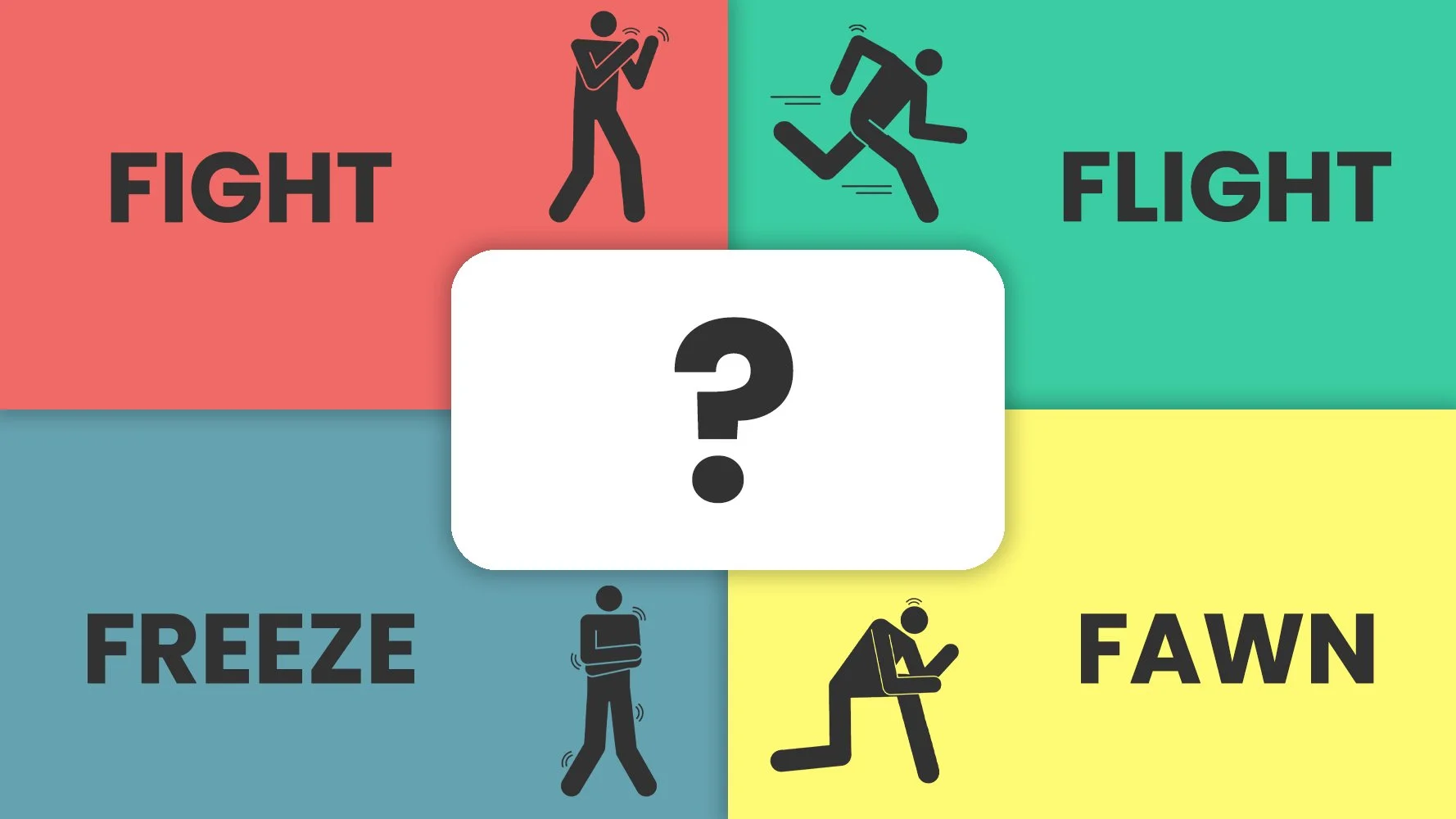
Your responses can shift in different situations—and that’s completely normal. You might not have one dominant pattern like Fight, Flight, Freeze, or Fawn. Instead, you may move between them depending on your environment, stress level, or relationships. This flexibility isn’t a flaw—it’s a sign of your system’s intelligence and adaptability, built to keep you safe.
Possible symptoms you may experience:
Being Freeze in some settings, Fight in others
Not knowing how you respond yet — or feeling different day to day
Blending traits across multiple categories
Feeling emotionally inconsistent — anxious one moment, numb the next, or suddenly reactive
Overthinking or second-guessing how you handled a situation
Switching between shutting down, over-apologizing, avoiding, or confronting
Feeling exhausted from constantly adapting to different people or dynamics
There’s nothing wrong with your responses.
Your nervous system is deeply adaptive.
When you’ve lived through stress, relational trauma, or unpredictability,
your system may have learned to shift and cycle through different states to survive.
This shape-shifting is protective—but it can also feel confusing,
especially when it’s hard to track what’s happening inside.
With awareness, you don’t have to fit into one box to grow.
Your flexibility is part of your resilience.
As you begin to notice your patterns,
you build choice, self-trust, and regulation—
the foundations of safety from within.